As embedded systems continue to evolve across industries ranging from industrial automation to connected devices and consumer electronics, selecting the right real-time operating system (RTOS) has become both a technical and strategic decision. Insights from the Linux Foundation Research report Zephyr® Turns 10: A Decade of Adoption, Maturity, and Ecosystem Evolution provide a detailed look at how organizations evaluate, deploy, and scale RTOS platforms in modern embedded development environments.
Diverse Approaches to RTOS Selection
The report shows that organizations follow different strategies when choosing an RTOS, with no single dominant approach across the industry.
About 30% of organizations standardize on a single RTOS across all projects, while 29% maintain a small portfolio of preferred RTOS options and select between them depending on project requirements. Another 20% evaluate RTOS platforms individually for each project based on technical needs and deployment constraints.
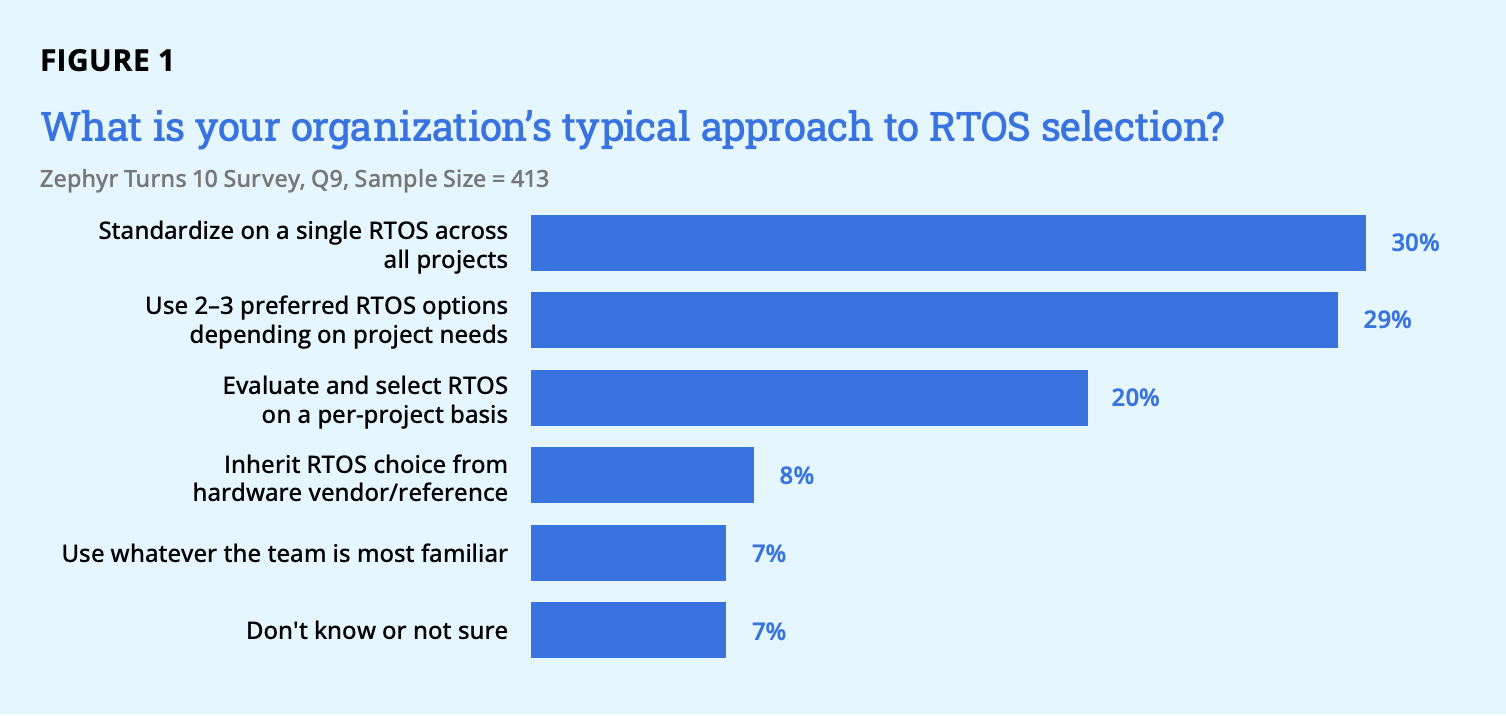
Selection practices also vary by region and company size. Large enterprises often prefer controlled flexibility by supporting multiple RTOS platforms internally, while smaller organizations are more likely to standardize on a single RTOS to reduce complexity and development overhead.
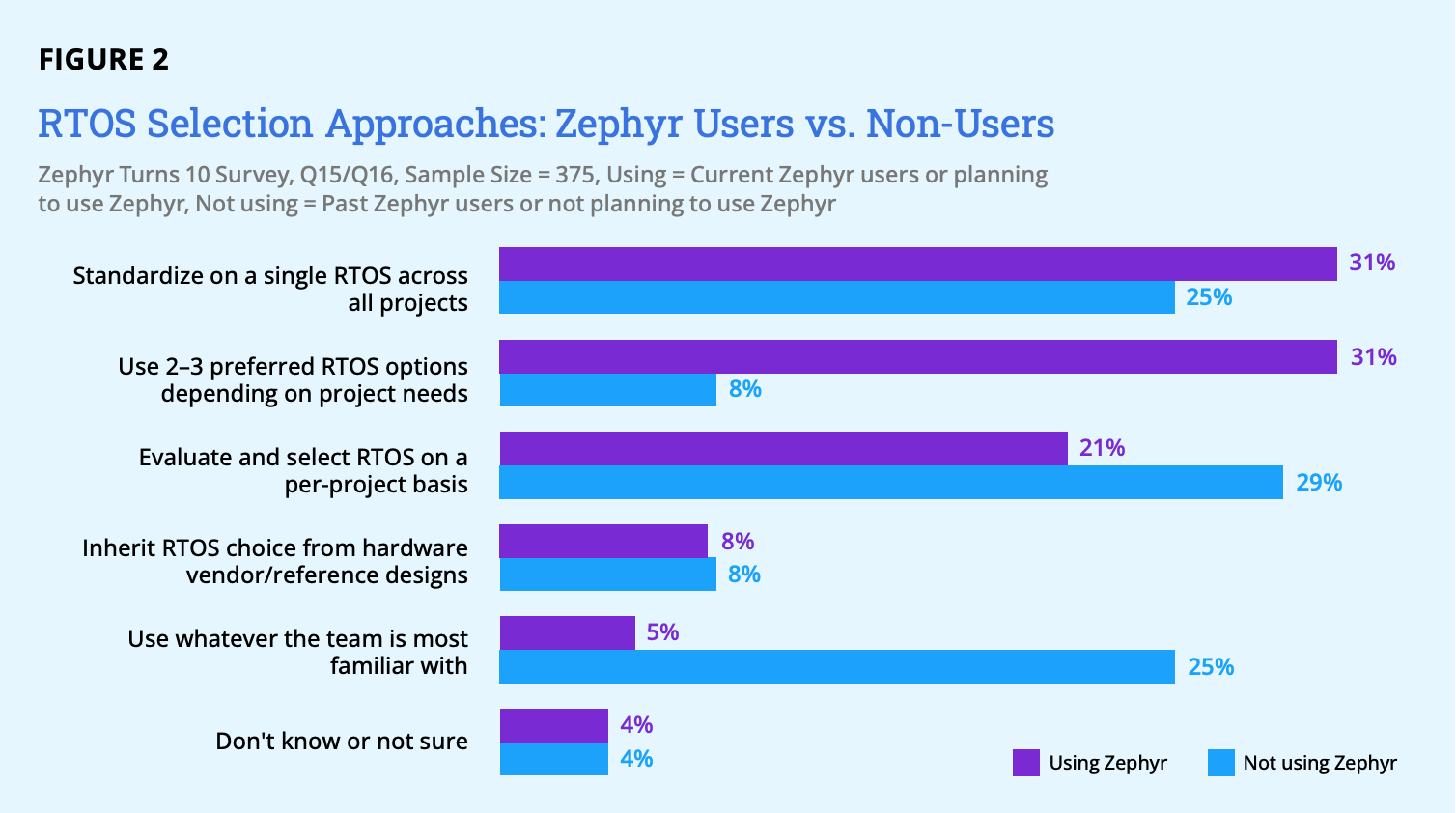
Interestingly, organizations using Zephyr tend to follow more structured RTOS strategies compared to non-users. Nearly two-thirds of Zephyr adopters either standardize on Zephyr or maintain a limited set of RTOS options, reflecting stronger long-term planning and ecosystem alignment.
Ecosystem Maturity and Hardware Support Matter Most
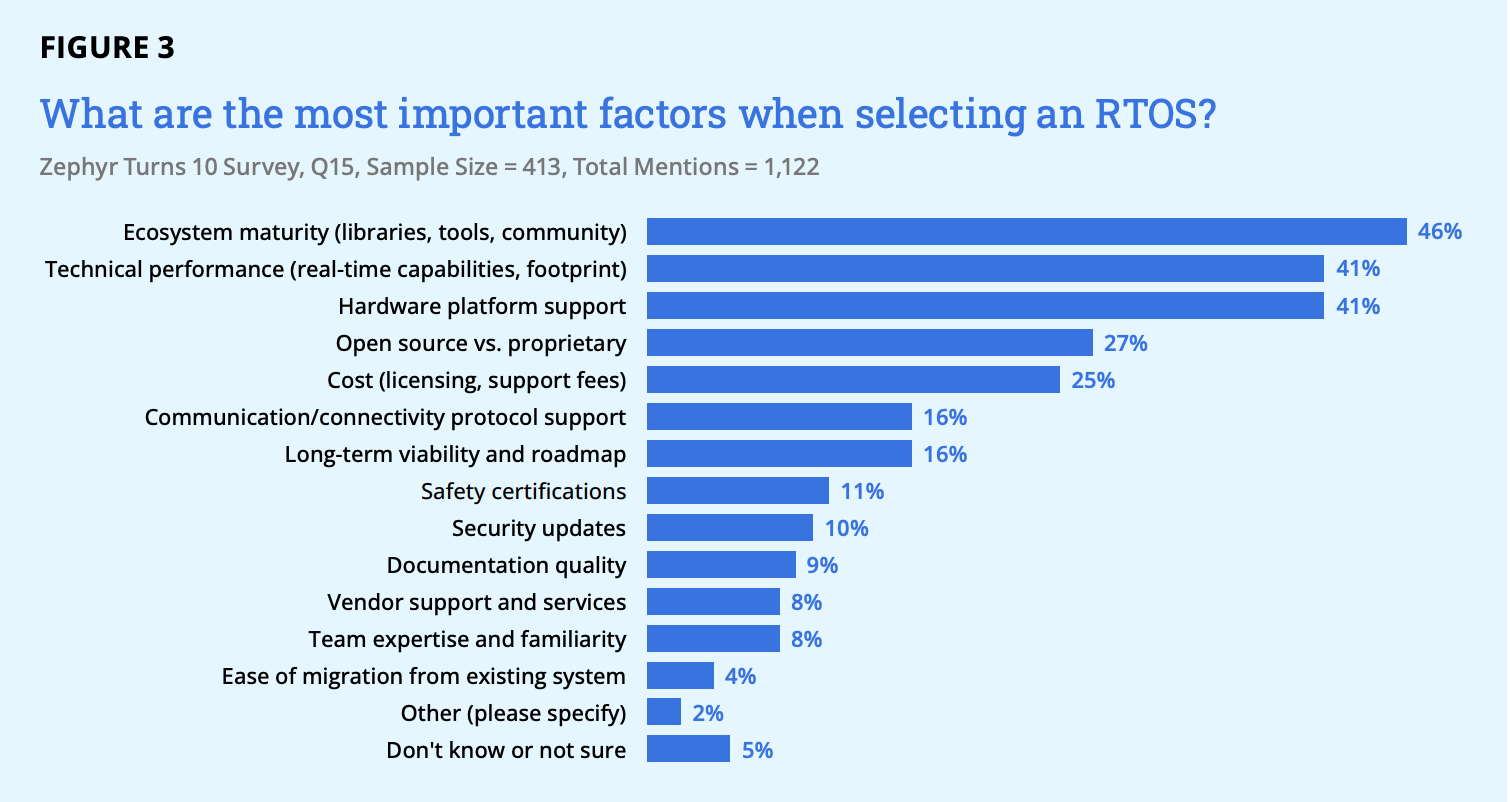
When selecting an RTOS, organizations consistently rank ecosystem maturity, hardware support, and technical performance among the most important decision factors.
The report highlights that developers value mature tooling, active communities, extensive documentation, and broad hardware enablement. For many teams, an RTOS is not simply a kernel choice it represents a long-term ecosystem investment that affects product maintainability, developer onboarding, and future scalability.
Respondents also emphasized the importance of modern development workflows and tooling. Zephyr’s use of technologies such as Devicetree, CMake, Python tooling, GitHub workflows, and its West project management tool were noted as familiar and effective for developers with open source experience.
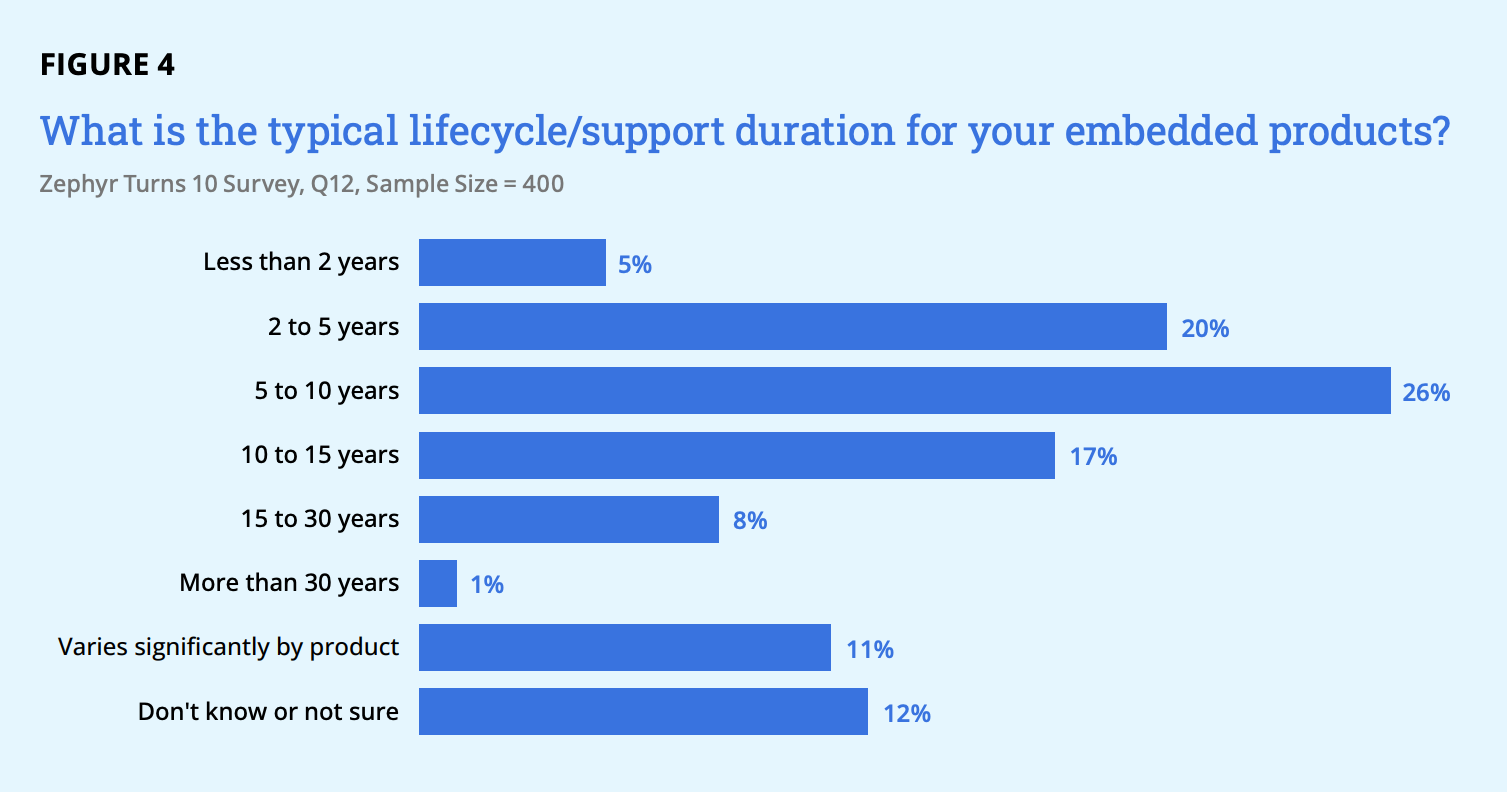
At the same time, organizations deploying products with long support cycles place significant value on stability and maintainability. Many embedded products remain in service for 5 to 10 years or longer, making long-term sustainability and ecosystem health critical considerations during RTOS selection.
Deployment Scale Shapes RTOS Requirements
The survey findings show that RTOS deployment environments vary significantly depending on product type and organizational scale.
Organizations using Zephyr are strongly represented in medium- to large-scale deployments, including fleets consisting of hundreds of thousands or even millions of devices. These environments typically require portability across heterogeneous hardware platforms, long-term maintainability, and efficient support for constrained devices.
Zephyr adoption is particularly strong in sensing, monitoring, and data collection applications where resource efficiency and hardware flexibility are essential. In contrast, organizations not using Zephyr reported greater use of alternative RTOS solutions in transportation and robotics-related deployments.
The report also highlights the diversity of RTOS deployment contexts. Beyond traditional embedded and IoT systems, respondents reported RTOS usage in consumer electronics, public lighting systems, VR and AR devices, USB controllers, and industrial infrastructure.
Resource Constraints Continue to Drive RTOS Decisions
Resource efficiency remains one of the defining characteristics of embedded development.
Most surveyed organizations reported operating within highly constrained hardware environments, with the largest share targeting systems containing between 128 KB and 512 KB of RAM. These constraints place strong emphasis on lightweight kernels, modular architectures, and optimized software stacks.
Budget considerations also play a major role in RTOS adoption decisions. Many organizations reported relatively modest annual RTOS-related budgets, reinforcing the importance of open source ecosystems, reusable components, and long-term cost efficiency.
As embedded systems become increasingly connected and software-defined, organizations are balancing performance, portability, ecosystem maturity, and sustainability when selecting their RTOS platforms.
The findings from the report position Zephyr as a mature and trusted RTOS platform that is increasingly being adopted in production environments with long product lifecycles and large-scale deployments. At the same time, the report highlights ongoing challenges around onboarding, security, certifications, ecosystem sustainability, and long-term maintenance.
As the embedded industry continues to evolve, RTOS selection is becoming less about choosing a standalone operating system and more about choosing a sustainable ecosystem capable of supporting products over many years of deployment and maintenance.
To learn more about these findings and explore the complete research, read the full Linux Foundation Research report, Zephyr® Turns 10: A Decade of Adoption, Maturity, and Ecosystem Evolution.